Wheel Line, Hand Line or K-Line: Choosing How to Move Your Water
K-Line is one reason some growers stop moving hand line, but it is not the answer for every field.
October 7, 2026 · 4 min read
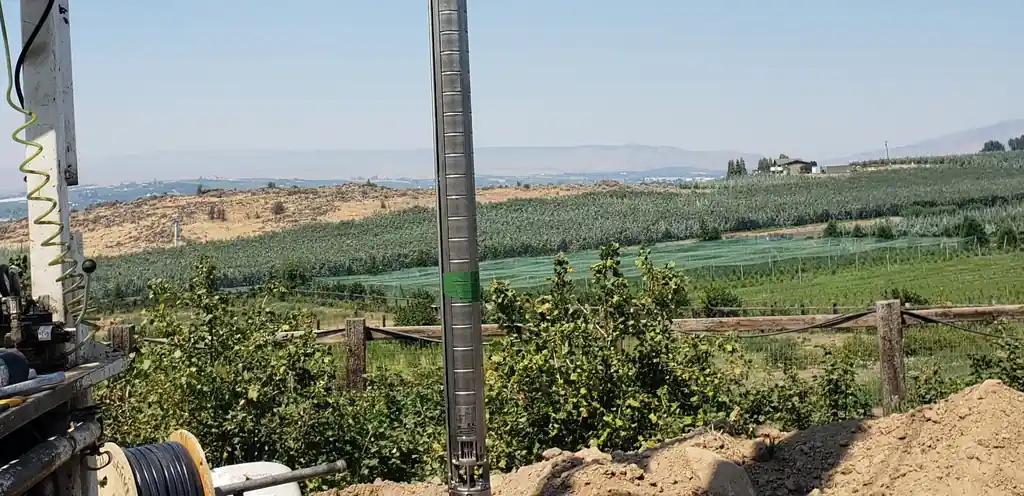
Irrigation in the Yakima Valley has a long history with aluminum pipe. In 1949 Ole Akland combined aluminum piping with an innovative pumping system to help farmers grow better crops using less water and labor. That is still the basic idea behind a lot of fields here: a pump at the source, and pipe that carries water out to sprinklers. What has changed is how the pipe gets moved from set to set.
If you run small acreage, a pasture, an orchard row or a hay field, you may be weighing three setups: wheel line, hand line and K-Line. Here is how they compare in plain terms.
Hand line: simple, but heavy on labor
Hand line is made of lengths of lightweight aluminum pipe with sprinklers on risers. At the end of each set, the water is shut off, the pipe is drained, and someone walks the field, uncouples the sections, carries them to the next position and hooks them back up. It is cheap to get started and works in almost any shape of field. The tradeoff is the work. Every move takes time, and the job comes around again every set for the whole season.
That is the problem Akland's K-Line page asks about: tired of moving hand line around?
Wheel line: moves itself, but wants a friendly field
A wheel line is a long run of aluminum pipe with the pipe itself mounted on big wheels. A small engine at the center rolls the whole line across the field to the next set. Fewer trips, much less carrying. Wheel lines do best on fairly level ground with a fairly regular layout, and they can have trouble with steep slopes, odd corners and rough ground.
Wheel line and hand line both depend on aluminum pipe, gaskets and fittings that wear and get damaged. Akland repairs both. The shop says it can repair wheel line and carries a large selection of gaskets and parts to keep your fields in water.
K-Line: easy to change, easy to move
K-Line uses lightweight flexible pipe with sprinklers mounted on small carts, and you move the line by pulling it across the field rather than breaking down and carrying heavy sections. Akland describes K-Line as easy to change and easy to move.
Their K-Line page makes two more points that matter in a hilly valley. First, K-Line has many options, including sprinklers that offer uniform water delivery even in very hilly terrain. Second, pressure compensated sprinklers result in good uniformity even with hills or longer lateral lines. A pressure compensated sprinkler is built to put out about the same amount of water at each position, even if the pressure at that spot is a little higher or lower because of elevation or distance from the pump. On sloped ground, that evens out the wet spots and dry spots.
The last line on the page may be the most useful: K-Line irrigation is designed to fit the field, not the field altered to fit the irrigation system. If your field is oddly shaped or has hills that make wheel line a struggle, that matters.
Alan B. bought a K-Line setup from the shop and wrote: “Mark took the extra time to explain how to set it up and everything turned out great.”
Questions to ask before you switch
- How steep is the field, and is it a regular shape or does it have corners and curves?
- What flow and pressure does your pump put out at the field? Sprinklers are picked for a certain range, and the pump has to supply it.
- How long are the runs from the water source to the farthest corner of the field?
- What are you growing, and how much water does it need each set?
- Who does the moving, how often, and how much of their time does it take today?
None of these has a one-size answer, and K-Line is not right for every field. A flat, square field with a wheel line already working well may not need changing. A hilly pasture with a hand line crew that dreads moves is a different story. The point is to match the setup to your ground and your water, not the other way around.
Start with the pump
Whichever way you move the water, the pump is what drives it. Before changing sprinklers or pipe, make sure your pump delivers the flow and pressure you think it does. If the pump is tired, worn or due for service, fix that first, because every sprinkler on the line depends on it. That is why a shop that works on both the pumps and the pipe is a helpful place to start.
Call Akland at (509) 452-7867 to talk through your field and learn more about K-Line, or stop in at 3701 Fruitvale Blvd, Monday through Friday, 7:30 to 5. Bring a rough sketch of the field and any numbers you have on your pump.
Akland Pump & Irrigation, (509) 452-7867
Call (509) 452-7867More articles
Why Your Well Pump Keeps Turning On and Off
Short cycling wears out a pump motor fast, and the cause is often the pressure tank sitting next to it.
Replacing a Well Pump: What to Have Ready Before You Call
Three numbers about your well let a pump shop put together a real estimate over the phone.